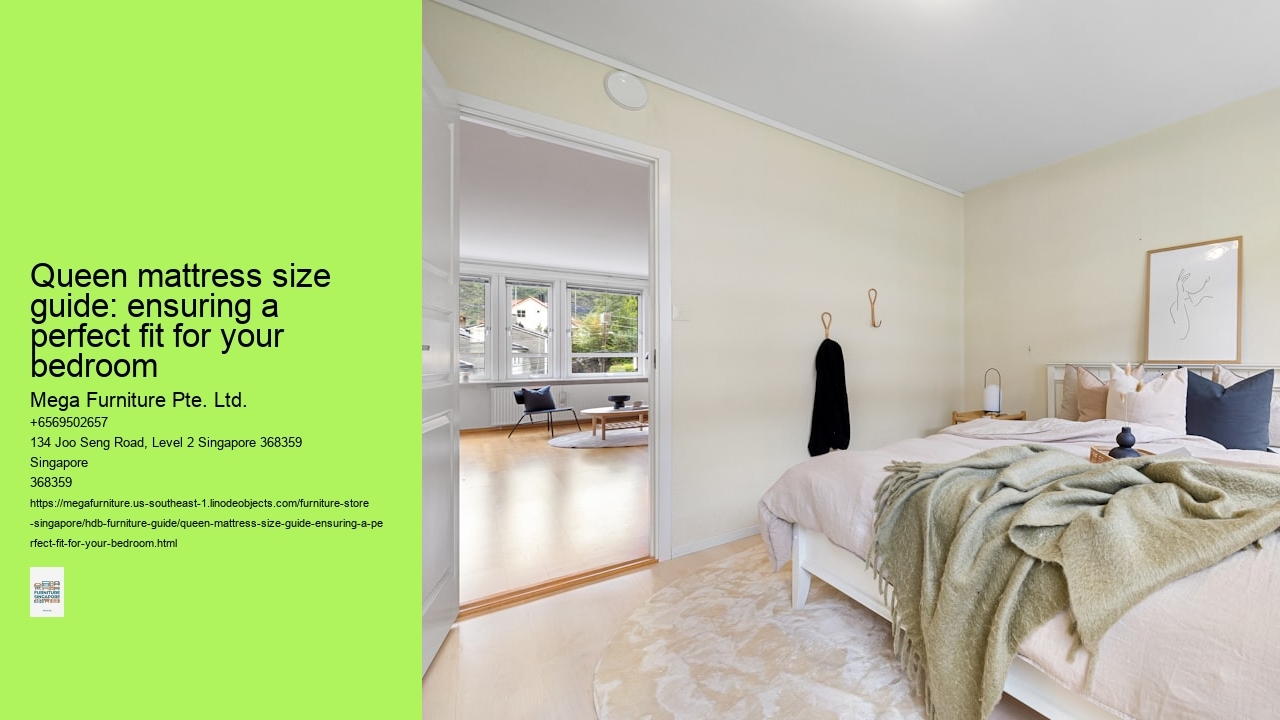
Walk into any 12 sqm master bedroom with two Super Singles shoved against opposite walls and you'll see the problem immediately. That's not a bedroom—it's a glorified corridor. Each bed takes up about a metre of width, leaving you with a narrow strip of floor that's good for nothing but shuffling sideways. You can't fit a proper wardrobe, a dressing table becomes a fantasy, and a bedside table is just something you'll stub your toe on. The whole room serves the beds, not the people in it.
Upgrading to a single Queen bed, sized at a standard 152 by 190cm, is less about getting a bigger mattress and more about reclaiming your floor plan. Consolidating that sleeping space into one central unit instantly frees up a full wall's worth of real estate. Suddenly, you've got space for a three-door wardrobe or a decent-sized study desk. That extra floor feels like a luxury in a resale flat in Tanah Merah or a BTO in Punggol. It’s the difference between a cramped sleeping zone and a room that actually works for living.
Some couples hold onto separate beds out of habit, or for the perceived luxury of personal space. But in a typical HDB master bedroom, that luxury is an illusion. You're trading usable surface and a sense of calm for a few inches of no-man's-land between two beds. Unless one of you is a seriously disruptive sleeper who needs total isolation, the trade-off just doesn’t make sense. Queen is the size most Singapore couples land on, and for good reason: at 152 by 190cm a queen size mattress gives two people room to sleep without the king's footprint swallowing the master bedroom. It's the balance point — wider than a super single, 30cm narrower than a king, and the size most HDB and BTO master bedrooms are quietly built around. The local dimension is worth pinning down, since a queen isn't the same everywhere: the SG standard is 152 by 190cm, where a US queen runs longer at 203cm and a UK queen wider at 160cm, so an imported assumption can leave a mattress that doesn't match the frame. Beyond size, the choice is feel and construction — memory foam for contouring, latex or hybrid for cooler support, pocket spring for the motion isolation that keeps one partner's movement from waking the other. Get the size and the feel right and a queen is the most practical comfort upgrade most bedrooms can make.. The only time I'd say keep the two Supers is if you're planning to convert that room into a study or nursery soon and need the flexibility—otherwise, you're just paying for extra frame and mattress while sacrificing your room's function.

Think about what you gain beyond the sleeping surface. That cleared wall can now take a full-height storage unit, solving the perennial HDB problem of where to stash luggage and extra bedding. Or it allows for a small armchair in a corner, creating a quiet reading nook. The psychological shift is just as important: one bed makes the room feel like a unified, intentional space, not a temporary dormitory setup. It’s a simple switch, but it changes everything about how you use the room.
A Queen’s footprint is 2.88 square metres. On paper, that’s a neat rectangle. In a real 3.5 by 3.4 metre condo master bedroom, it’s a geometry puzzle where every centimetre counts. You’ve got to account for the swing of that inward-opening door, the standard 60-centimetre depth of a built-in wardrobe, and whether you can actually open the bottom drawer of a bedside table once the frame is in place. Leave less than 60 centimetres on the exit side and you’ll be shimmying sideways to get out of bed—not a great start to the day.
The west-facing Eunos flat adds another layer. That strong afternoon sun doesn’t just heat the room; it beats directly onto the mattress surface through the window for hours. Over years, that relentless exposure can degrade materials faster, drying out natural fibres and causing certain foams to break down prematurely. It’s a factor you can’t measure with a tape, but one that impacts longevity all the same.
So, does a Queen fit? In most Singapore master bedrooms, absolutely. It’s the standard for a reason. But fitting and functioning are two different things. You need to trace the bed’s placement against every fixed point. Can the bedroom door still open past the footboard? Is there enough space beside the bed for that deep wardrobe door to swing clear? These aren’t hypotheticals—they’re the practical checks that prevent a costly layout mistake after delivery.

The one real exception is if your master bedroom dimensions are genuinely atypical, perhaps in a very compact resale flat or an oddly shaped corner unit. In those cases, even a Queen might force you to sacrifice a bedside table or block a crucial air-con vent. For the vast majority, though, careful planning means a Queen won’t just fit; it’ll live comfortably within the room’s constraints, leaving you space to move and breathe.
Moving from two separate single mattresses to one shared queen fundamentally changes your spending logic. That old budget of around eight hundred to twelve hundred dollars for two beds gets consolidated into a single, more substantial investment. You're not just buying a bigger piece of foam; you're funding a complex piece of sleep engineering designed for dual occupancy. This shift pushes you firmly into the fifteen hundred to twenty-five hundred dollar bracket, which is where construction and materials genuinely change. Spending here gets you a core built to last a decade, not just a few years of solo sleep.
The queen mattress at this price point is a different beast entirely. Its internal structure is calibrated for two distinct body weights and sleeping positions, providing consistent support from edge to edge. Cheaper models often soften dramatically at the perimeter, leaving one partner feeling like they might roll off. A properly engineered queen maintains its firmness profile across the entire sleeping surface, so both of you get the same level of support night after night. That uniform support is what prevents premature sagging and ensures the mattress doesn't develop a permanent dip in the middle.
This is the non-negotiable feature for couples, and it's where the budget gets justified. When your partner turns over or gets up for a drink, their movement shouldn't translate into a wave that rocks you awake. Higher-end mattresses use advanced pocketed coil systems or specialised foam layers that absorb and contain movement within one zone. You're paying for that peace, for the guarantee that a restless night for one doesn't become a ruined night for both. It's a quiet luxury that makes a tangible difference to your sleep quality over the long term.

Think of the upgrade as buying time. A mattress in the lower price range, when subjected to the combined weight and use of two adults, will often break down faster—springs start to protest, foams lose their resilience. The materials in the higher bracket are selected for their ability to withstand double the pressure and recover their shape consistently. This resilience translates directly into the promised decade of service, spreading that initial cost over many more nights of proper support. It’s the classic buy-once, cry-once principle applied to your most important piece of furniture.
Some buyers balk at the number, seeing only a larger expense rather than a smarter consolidation. But the math is straightforward: you were potentially ready to spend on two separate sleep solutions. Pooling those funds into one superior product engineered for partnership is a more efficient use of your money. The value isn't in the square centimetres of fabric; it's in the uninterrupted sleep, the lack of partner disturbance, and the years you won't spend shopping for a replacement. That’s the real return on shifting your budget from single sleepers to a true couple’s bed.
Singapore’s humidity hovers around 80% for months on end, and that relentless dampness doesn’t just stick to your skin—it works into your mattress core. A natural latex core, while breathable and supportive, can actually absorb moisture from the air over time, leading to a subtle softening and a change in feel that you might notice after a few years. Memory foam, favoured for its pressure relief, is denser and tends to trap heat; in a poorly ventilated bedroom, say a west-facing Aljunied flat with limited cross-breeze, that combination can turn a night’s rest into a sweaty ordeal. For those conditions, an innerspring system with a wool barrier makes a smarter choice—the coils allow air circulation while the natural wool layer acts as a humidity buffer, drawing moisture away from the sleeping surface without degrading.
The fabric encasing your queen mattress matters just as much. Cooling Tencel or woven bamboo covers are popular for their silky, breathable feel, but their real value here is longevity. They resist mildew and handle night sweat without pilling or developing that permanent damp patch smell some cheaper polyester blends get. A dark, patterned Tencel cover will also hide the occasional stain better than a light solid colour, which is a practical point if you’ve got kids who might climb in or if you enjoy a late-night snack in bed.
Now, the one exception to the breathable-material rule is if your bedroom is genuinely dry—maybe you’ve got a dehumidifier running constantly or your condo has exceptional cross-ventilation. In that rare case, you could consider a tighter-weave fabric for a different feel, but for most HDB master bedrooms, prioritising airflow through the materials is the way to go. Don’t just think about the top layer; check if the mattress side panels use the same performance fabric, because humidity attacks from all sides.
Ultimately, your 152 by 190cm queen is a long-term investment for two people. Choosing a core and encasement that can handle our climate means you won’t be dealing with premature sagging, a musty smell, or that feeling of sleeping on a warm, damp sponge halfway through its lifespan. It’s about matching the engineering inside the mattress to the reality outside your window.
The real test of a Queen mattress isn't the delivery up the HDB lift—it’s the first night two bodies with opposite needs try to share it. One of you sinks into a plush cloud feeling bliss, while the other lies rigid, spine howling in protest. That divergence isn’t a small thing; it’s the nightly argument you’re buying along with the bed. The good news is mattress construction has evolved precisely for this stalemate.
Layered designs are the classic peace treaty. They combine a firm, supportive core for alignment with a softer comfort top for pressure relief. It’s a single surface trying to please both, and for many couples, it works. But when weight difference is significant or preferences are poles apart, a dual-zone mattress is the clearer solution. These have separate firmness settings built into each side of the 152cm width, so nobody has to sacrifice proper support. The compromise shifts from the sleeping surface to the budget—these models typically cost more.
This is why showroom testing is non-negotiable. You must both lie down together on the floor model for a solid ten minutes, not just a quick sit. Simulate your real sleeping positions. That plush top might feel divine for a minute, but will it let your partner’s hips sink too far over time? The firm one that seems perfect for spinal alignment might create uncomfortable pressure points on shoulders and knees. You’re looking for the point where both of you can say, “This one can.”
Ignore the impulse to choose based on who complains louder or who sacrifices first. A bad compromise here means one person ends up on the living room sofa, which defeats the purpose of buying a Queen for two. The one real exception? If one partner has a medically prescribed firmness requirement, that has to take priority—then you build the comfort layer around that non-negotiable base with a topper or specific layered model. For everyone else, that shared lie-down in the showroom is the most important furniture shopping you’ll do together.
You can spend hours scrolling through mattress reviews online, but your fingers won’t feel the fabric weave and your back won’t register the foam’s pushback. That’s the one thing you can’t skip—going down to a showroom and spending a good twenty minutes lying on the beds you’ve shortlisted. For a Queen mattress meant for two, you need to test it with your partner present; what feels perfectly firm to you might be a concrete slab to them, and vice versa.
The real test is in the sequence. You’ll want to sit on the edge of each model, one after another, to compare how well the perimeter holds you up when you’re putting on shoes or getting out of bed. Then, lie down side-by-side. Have your partner shift their weight or get up—you’ll feel how much motion transfers across the surface. A mattress that isolates movement well means fewer midnight disturbances. This side-by-side comparison in a single visit is crucial because memory fades; you won’t accurately recall the feel of a model you tried last week.
Firmness is a personal thing, but for a couple, it’s a negotiation. One might prefer a plush top that cradles the shoulders, while the other needs firmer support for the lower back. The only time I’d say a showroom visit isn’t as critical is if you’re both replacing an identical model you already love and know works for you. Otherwise, guessing based on a product description is a sure way to end up with a compromise that satisfies nobody.
So block out a Saturday afternoon, head down to a showroom with your other half, and treat it like a proper test session. Wear comfortable clothes you can move in, and don’t rush. Spend a few minutes on each shortlisted Queen mattress, trying different sleeping positions you actually use. That physical, hands-on assessment—the bounce of the foam, the tightness of the quilt, the solidity of the edge—is the single most reliable step in finding a bed you’ll both be happy with for the next decade. It’s an investment in your sleep and your relationship, so do the legwork.
Moving up to a Queen mattress feels like a rite of passage for many Singapore couples, but the practicalities can trip you up if you’re not prepared. The questions that surface are always the same ones, born from our unique flat layouts and relentless climate.
Can a Queen mattress fit a 10-year-old HDB master bedroom? Almost always, yes. The standard 152 by 190cm Queen is designed for our typical master bedroom footprint. You’ll want to leave at least a 60cm walkway on the side you exit from, but even a decade-old flat’s master room can usually accommodate that. The real squeeze point isn’t the room itself—it’s the journey there. Measure your internal bedroom door; if it’s the common single-leaf type, you’ve got just over 90cm of width to play with. A flexible mattress can be bent and nudged through, but a rigid bed base might not.
How to choose between latex and hybrid for hot sleepers? Latex is naturally breathable and resists dust mites, which is a solid win for our humidity. A good latex core sleeps cooler than most memory foams. But a hybrid—with its pocketed springs and foam layers—often gives better airflow *through* the mattress. For someone who sleeps genuinely hot, that through-draft can be the decider. Don’t get hung up on material labels alone; feel the difference in a showroom, lie on it for a few minutes, and see which one feels less like you’re baking.
What is a realistic lifespan for a mattress under SG humidity? Expect a decent Queen mattress to last around seven to eight years here before support noticeably dips. Humidity is the silent killer—it doesn’t just make you sweat, it slowly degrades the internal materials over time, especially if the room isn’t well-ventilated. Turning and rotating your mattress every few months evens out the wear and can stretch that lifespan a bit. Once you start waking up with new aches, that’s your cue; the mattress has done its time.
Does upgrading from a Super Single require a new bed frame? Almost certainly. A Super Single is 107cm wide, while a Queen is 152cm. That’s a 45cm jump—your old slats or platform simply won’t fit. Trying to squeeze a Queen onto a smaller frame is a fast track to sagging and voided warranties. The one exception is if you have a modular or adjustable bed base designed to expand, but those are rare. Budget for the new frame; it’s a non-negotiable part of the upgrade.
In a Bedok 4-room BTO, every centimetre is a negotiation. You might measure out the master bedroom and think a 152 by 190cm Queen leaves just enough walkway, but that’s before you consider the mattress itself. A thick, premium construction with multiple comfort layers can easily add 30cm or more to the overall height, which visually consumes the room and makes simple tasks like changing fitted sheets a climb. Opt for a slimmer profile to keep the space feeling airy, and you’re often looking at simpler, firmer builds that might not hold their shape as long under nightly use.
This is the real calculation: are you buying for the room or for the sleep? For eight years of service, you want a mattress that maintains its support, where the foam doesn’t compact into permanent body impressions. Those robust, multi-layered designs are engineered for that very longevity. Yet, cram one into a compact 12 sqm room and the space feels choked—you’ll be sidling around the bed, and the room’s entire function shrinks down to just the bed itself. It’s a classic Singapore flat dilemma where the ideal material choice bumps right up against the physical limits of the floor plan.
I’d lean towards prioritising material longevity almost every time. A good night’s sleep for nearly a decade outweighs the slight spatial gain from an ultra-thin mattress. That thinner budget model might save you a few centimetres of visual height, but it’s the one that will start to sag and feel lumpy after a few years, forcing an early replacement. That’s a false economy, because you’re not just buying the mattress; you’re buying the restful sleep it provides for its entire lifespan.
The only exception is if your bedroom layout is genuinely tight—we’re talking about having less than 30cm of clearance on one side after the bed is in. In that specific scenario, sacrificing some material complexity for a lower profile is a practical compromise. You’ll still want to seek out the densest foam you can find within that slimmer format, because that’s what fights compression. Just know that you’re trading some long-term comfort for immediate breathing room, a call that makes sense only when the space truly demands it.
Walk into the showroom with a tape measure and a rough sketch, and you’ll already be ahead of half the couples there. The last thing you want is to fall for a perfect bed that simply won’t fit through your bedroom door. It’s not just about the room’s length and width; you need to check the diagonals. Older HDB blocks and some condos have bedroom doors that sit at an awkward angle to the corridor, and a rigid Queen mattress frame needs that extra diagonal clearance to pivot in. The lift door, typically around 90cm wide, is the usual choke point, but your own bedroom doorway is often the real surprise.
Don’t forget the door swing itself. A door that opens inward needs enough arc to clear the new bed’s footprint, otherwise you’ll be squeezing through a sliver of space every night. Sketch your floor plan, noting the swing and any built-in wardrobes or bay windows that eat into the floor space. Then, measure the depth of any existing furniture you’re keeping—that tallboy from your old place, or the vanity dresser. You need to know how much floor will be left for walking after the 152 by 190cm Queen is in place.
Bring both partners' height and weight notes, too. This isn’t just for showroom small talk. A mattress that feels blissfully firm to a lighter person can feel like a concrete slab to their heavier partner, and vice-versa. Your combined needs determine the ideal core support and comfort layer. A sketch with your furniture depths and these personal specs turns a vague discussion into a tailored recommendation for a mattress that fits your room and your bodies.
The one time you might skip the diagonal check is if you’re certain you’re buying a mattress-only, with a separate bed frame to be assembled inside the room. But if you’re looking at a complete bedstead or a divan base, that final measurement trip is non-negotiable. Getting it wrong means a delivery day headache, a possible staircase carrying surcharge, or the sian task of sending the whole thing back. A few minutes with the tape measure saves all that trouble.